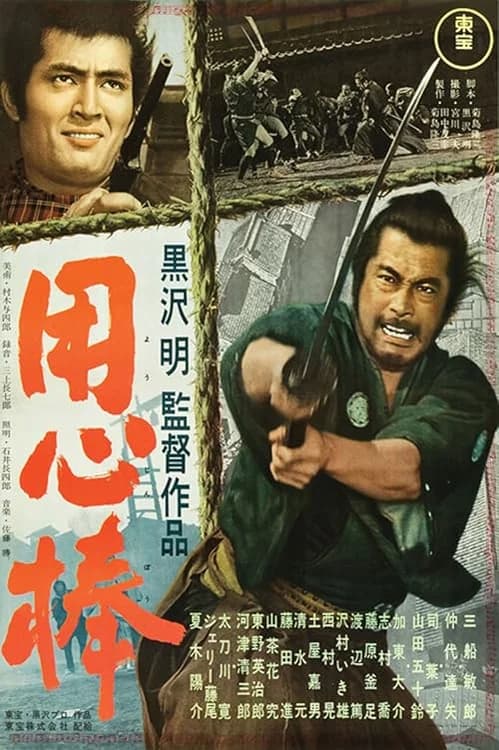
About Yojimbo
Akira Kurosawa's 1961 masterpiece Yojimbo stands as one of the most influential action films ever made, blending razor-sharp storytelling with groundbreaking cinematic technique. The film follows a nameless, wandering ronin (Toshiro Mifune) who arrives in a desolate town terrorized by two competing criminal factions. Seeing an opportunity for profit and moral cleansing, he brilliantly plays both sides against each other, manipulating the gangs into mutual destruction while maintaining his cool, cynical demeanor.
Toshiro Mifune delivers one of his most iconic performances as the cunning samurai, embodying a perfect balance of world-weariness, intelligence, and lethal capability. His physical presence—scratching his shoulder, flicking a toothpick—became legendary cinematic shorthand for controlled power. Kurosawa's direction is masterful, employing dynamic widescreen compositions, atmospheric lighting, and rhythmic editing that would later inspire countless Westerns and action films worldwide, most notably Sergio Leone's A Fistful of Dollars.
Beyond its thrilling plot and expert craftsmanship, Yojimbo explores themes of corruption, greed, and moral ambiguity in a society where traditional values have collapsed. The film's dark humor and cynical outlook are balanced by a core belief in individual agency and justice. Viewers should watch Yojimbo not only for its historical importance but for its timeless entertainment value—a perfectly paced, visually stunning, and intellectually engaging work that remains as fresh and powerful today as it was over six decades ago. It's essential viewing for anyone interested in cinema's evolution and the art of storytelling through action.
Toshiro Mifune delivers one of his most iconic performances as the cunning samurai, embodying a perfect balance of world-weariness, intelligence, and lethal capability. His physical presence—scratching his shoulder, flicking a toothpick—became legendary cinematic shorthand for controlled power. Kurosawa's direction is masterful, employing dynamic widescreen compositions, atmospheric lighting, and rhythmic editing that would later inspire countless Westerns and action films worldwide, most notably Sergio Leone's A Fistful of Dollars.
Beyond its thrilling plot and expert craftsmanship, Yojimbo explores themes of corruption, greed, and moral ambiguity in a society where traditional values have collapsed. The film's dark humor and cynical outlook are balanced by a core belief in individual agency and justice. Viewers should watch Yojimbo not only for its historical importance but for its timeless entertainment value—a perfectly paced, visually stunning, and intellectually engaging work that remains as fresh and powerful today as it was over six decades ago. It's essential viewing for anyone interested in cinema's evolution and the art of storytelling through action.