About Cloud Atlas
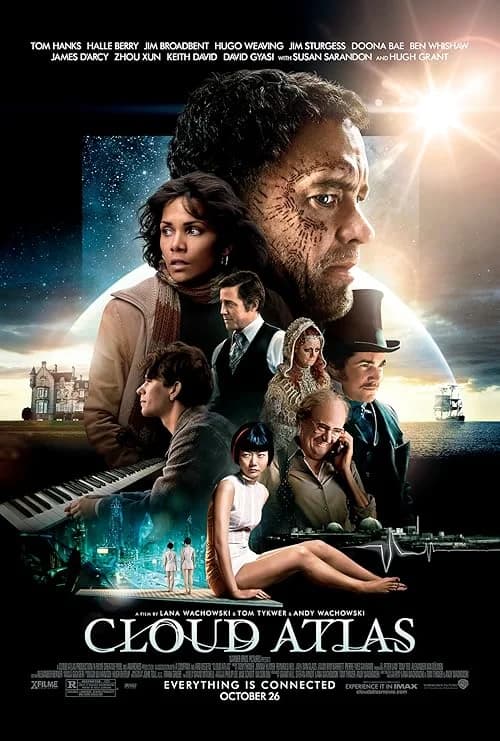
Cloud Atlas (2012) is a breathtaking cinematic achievement that defies conventional storytelling, weaving together six distinct narratives that span from the 19th century to a post-apocalyptic future. Directed by the visionary trio of Lana and Lilly Wachowski and Tom Tykwer, this ambitious film explores how individual lives and actions ripple across time, connected by recurring souls, themes of freedom, love, and resistance against oppression. Based on David Mitchell's acclaimed novel, the film features an ensemble cast including Tom Hanks, Halle Berry, Jim Broadbent, and Hugo Weaving, each playing multiple roles across different timelines, showcasing remarkable versatility.
The film's intricate structure moves between a Pacific Ocean voyage in 1849, a 1930s composer's letters, a 1970s investigative thriller, a present-day comedic escape from a nursing home, a dystopian future in Neo Seoul, and a primitive post-collapse society. What makes Cloud Atlas truly compelling is its profound thematic core: the idea that our lives are not isolated but part of a vast, interconnected tapestry where kindness, courage, and tyranny echo through generations. The direction is both bold and meticulous, with each era possessing a unique visual and auditory identity, yet seamlessly blending into a cohesive whole.
Viewers should watch Cloud Atlas for its unparalleled ambition and emotional depth. It challenges audiences to think deeply about legacy, humanity, and the cyclical nature of history, all while delivering gripping individual stories. Despite its nearly three-hour runtime, the film remains engaging through its masterful editing and powerful performances. Whether you're a fan of thought-provoking science fiction, epic drama, or cinematic artistry, Cloud Atlas offers a rewarding experience that lingers long after the credits roll, inviting reflection on how every action shapes the future.
The film's intricate structure moves between a Pacific Ocean voyage in 1849, a 1930s composer's letters, a 1970s investigative thriller, a present-day comedic escape from a nursing home, a dystopian future in Neo Seoul, and a primitive post-collapse society. What makes Cloud Atlas truly compelling is its profound thematic core: the idea that our lives are not isolated but part of a vast, interconnected tapestry where kindness, courage, and tyranny echo through generations. The direction is both bold and meticulous, with each era possessing a unique visual and auditory identity, yet seamlessly blending into a cohesive whole.
Viewers should watch Cloud Atlas for its unparalleled ambition and emotional depth. It challenges audiences to think deeply about legacy, humanity, and the cyclical nature of history, all while delivering gripping individual stories. Despite its nearly three-hour runtime, the film remains engaging through its masterful editing and powerful performances. Whether you're a fan of thought-provoking science fiction, epic drama, or cinematic artistry, Cloud Atlas offers a rewarding experience that lingers long after the credits roll, inviting reflection on how every action shapes the future.